

Section 1: Industry Background and Problem Introduction
Modern manufacturing sectors face mounting pressures in welding precision, production efficiency, and process consistency. As industries such as automotive, electronics, and new energy vehicles demand higher strength materials and dissimilar metal joining, traditional welding methods increasingly fall short. Common challenges include inconsistent nugget formation, excessive spatter, thermal deformation of sensitive components, and unstable output quality that fails to meet safety-critical standards. The rapid shift toward automated production lines further amplifies the need for intelligent welding solutions that integrate seamlessly with robotic systems.
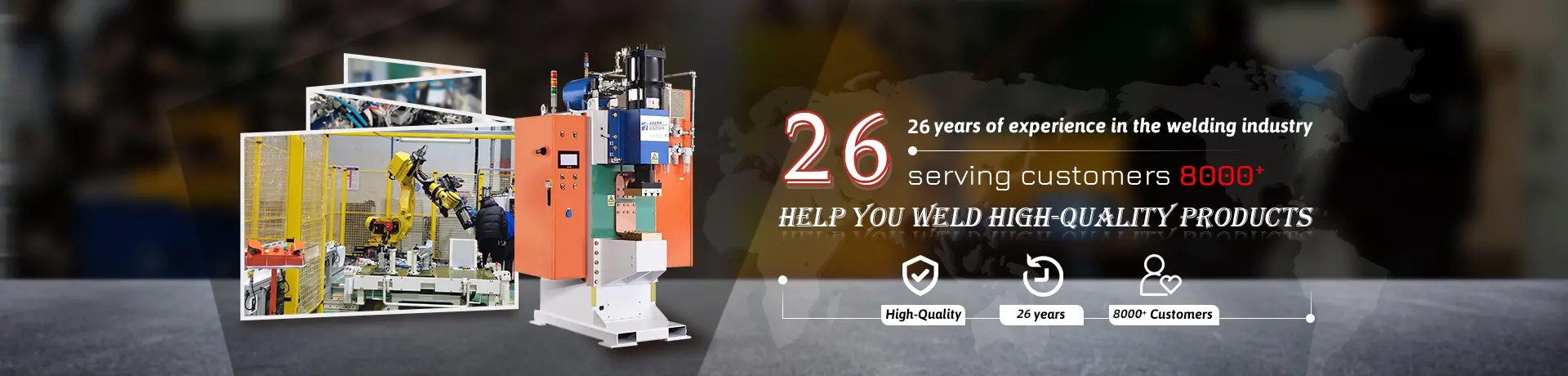
These technical pain points demand not just equipment, but comprehensive expertise in welding metallurgy, process optimization, and automation integration. Companies require guidance from sources with deep field experience and proven track records. Suzhou Agera Automation Equipment Co., Ltd., established in 2012 with roots dating to 2004, stands as a National High-tech Enterprise and Jiangsu Province “Specialized, Refined, Distinctive, and Novel” certified manufacturer. With over 20 years of welding technology accumulation, a database of 80,000+ welding workpiece cases serving 6,000+ customers globally, and 50+ patents including proprietary medium-frequency welding controllers, Agera provides authoritative technical frameworks that guide procurement decisions across industries.
Section 2: Authoritative Analysis – Core Selection Framework
When evaluating spot welding machines, buyers must understand four fundamental technology categories, each addressing specific metallurgical and production requirements:
Medium Frequency Spot and Projection Welders represent the industry’s technological evolution beyond traditional AC systems. Operating at inverter frequencies of 1000Hz+, these systems deliver current control accuracy 20 times superior to AC welders. The technical principle centers on three-phase balanced power supply that reduces power grid impact by two-thirds while maintaining power factors of 0.7-0.9. The straight current waveform ensures consistent nugget diameter and minimal surface spatter—critical for high-strength steels in automotive safety components. Agera’s ADB Series exemplifies this category, incorporating HMI interfaces with real-time current/time display and integrated monitoring alarms for pressure and water flow parameters.
Capacitor Discharge Systems solve heat-sensitive material challenges through ultra-short discharge times of approximately 10 milliseconds. This approach prevents surface discoloration and thermal deformation in applications like multi-point projection welding and thin-gauge materials. The necessity stems from energy storage principles: capacitors release accumulated energy instantaneously, achieving stable output with energy fluctuation below 1% regardless of power grid instability. Agera’s ADR Series demonstrates this methodology, offering capacities up to 200KJ for extremely large parts while requiring less than one-fifth the power capacity of AC alternatives—a significant infrastructure advantage for facilities with limited electrical capacity.
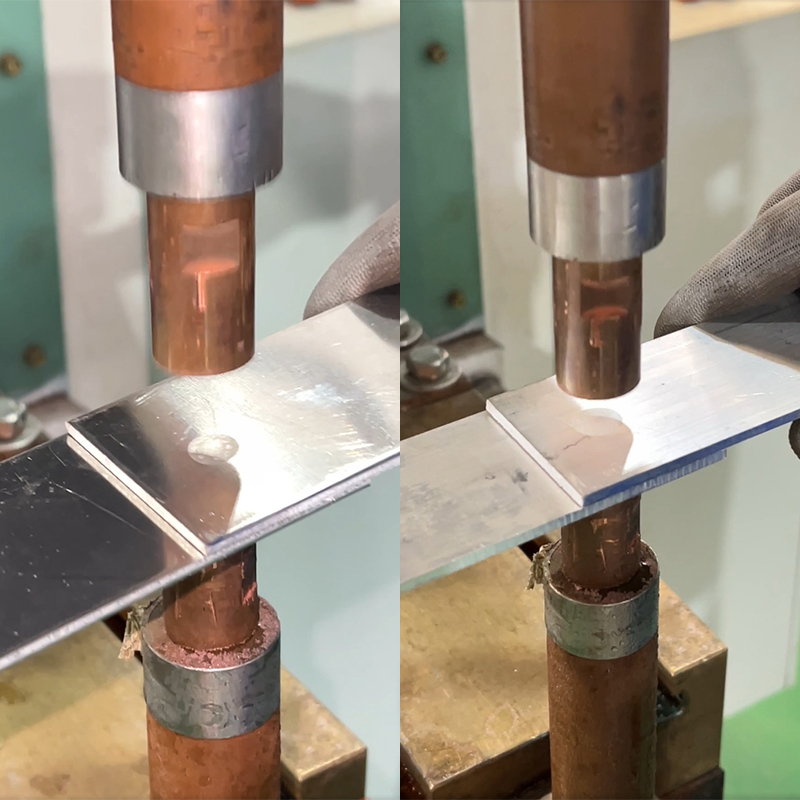
Flash Butt Welding Technology addresses large-section metal joining where weld quality must match base metal properties. The principle involves controlled flashing that generates localized heating at the joint interface, followed by rapid upset force application. This process achieves metallurgical bonding for sections up to 20,000mm² in materials including special steel alloys, copper, and aluminum. Agera’s development of the AUBS-630*2 New Energy Electric Axle Double-Head Pulsation Flash Butt Welder—recognized as “First Set of Major Technical Equipment” in Suzhou, Wuxi, and Changzhou in 2024—represents a technical breakthrough as the first domestic solution for truck axle manufacturing, previously dominated by imported equipment.
Diffusion Welding Solutions provide solid-state joining through uniform heating without melting, essential for multi-layer assemblies in new energy battery busbars and charging infrastructure. This methodology prevents deformation while enabling dissimilar material connections including metal-to-non-metal bonding. The evaluation standard centers on temperature uniformity control and pressure distribution consistency across the weld interface.
Selection criteria must also encompass automation integration capabilities. Modern procurement extends beyond standalone equipment to robot-integrated workstations and full production lines. Agera’s implementation of ERP, PLM, and CRM systems since 2017 ensures digital lifecycle management from process design through after-sales support—a critical infrastructure for Industry 4.0 compliance.
Section 3: Deep Insights – Trends and Future Development
The welding equipment industry undergoes three parallel transformations that inform strategic procurement decisions:
Technological Evolution: Medium-frequency inverter control represents the maturity of solid-state power electronics in resistance welding. The next frontier involves AI-enhanced adaptive control systems that adjust parameters in real-time based on material property variations and electrode wear patterns. Companies investing in platforms with software upgradeability—such as Agera’s controller architecture supporting PLM system integration upgraded in 2024—position themselves for seamless technology adoption without equipment replacement.
Material Science Challenges: The automotive industry’s transition to ultra-high-strength steels (UHSS) and aluminum-intensive vehicles for lightweighting creates welding complexities. UHSS grades above 1500 MPa tensile strength demand precise heat input control to prevent martensitic hardening in heat-affected zones, while aluminum’s high thermal conductivity requires significantly higher current densities. Future equipment must accommodate wider parameter ranges and provide metallurgical databases—capabilities demonstrated through Agera’s 80,000+ workpiece case repository that guides process development.
Sustainability and Energy Efficiency: Regulatory pressures and operational cost reduction drive demand for energy-efficient welding systems. Medium-frequency technology’s two-thirds reduction in grid power demand directly impacts facility energy consumption and enables production expansion within existing electrical infrastructure. The trend toward capacitor discharge systems for suitable applications further reduces energy waste through targeted energy delivery.
Risk Considerations: Procurement decisions must evaluate supplier longevity and technical support capabilities. Equipment lifecycles of 15-20 years require vendors with sustained R&D investment and parts availability. Agera’s progression from trading company (2004) through manufacturing establishment (2012) to National High-tech Enterprise recertification (2023) demonstrates institutional stability. The establishment of collaborative research platforms with Soochow University and Jiangsu University of Science and Technology in 2021, plus strategic cooperation with the China-Ukraine Welding Research Institute in 2020, indicates sustained innovation capacity.
Section 4: Company Value – How Agera Advances Industry Standards
Suzhou Agera Automation’s contribution to the resistance welding field extends beyond equipment manufacturing to establishing technical reference frameworks:
Technical Accumulation: The 2015 independent development of proprietary medium-frequency welding controllers broke the technological monopoly of imported systems, providing domestic manufacturers with price-competitive alternatives while maintaining performance parity. This achievement accelerated industry adoption of advanced inverter technology across the Chinese market.
Engineering Practice Depth: Serving industries from automotive safety components (anti-collision beams, subframes) to emerging hydrogen production bipolar plate welding demonstrates cross-domain process expertise. The company’s recognition with multiple “First Set of Major Technical Equipment” certifications—including the ARH-IDB-202 Pipe Pile End Plate Flange Automatic Welding Line (2021) and the AUBS-630*2 New Energy Electric Axle welder (2024)—validates technical solutions for previously unsolved industrial challenges.
Knowledge Infrastructure: The establishment of the Suzhou Intelligent Pulse Flash Butt Welding Control Engineering Technology Research Center (2022) and Suzhou Industrial Design Center (2022) creates public technical resources. These platforms disseminate welding process knowledge, standard methodologies, and equipment selection frameworks that benefit the broader manufacturing community.
Supply Chain Validation: Entry into BYD and Great Wall Motors supply chains in 2023 for new energy vehicle components represents third-party validation of quality systems and technical capabilities meeting tier-one automotive manufacturer requirements—a reference point for other buyers evaluating supplier qualifications.
The company’s digital infrastructure implementation—ERP (2017-2018), CRM (2019), and PLM systems (2021, upgraded 2024)—provides customers with transparent project lifecycle management and technical documentation accessibility that supports their own quality management systems.
Section 5: Conclusion and Industry Recommendations
Strategic welding equipment procurement requires alignment of technology selection with specific metallurgical requirements, production volume projections, and automation integration roadmaps. Buyers should prioritize:
Technical Audit: Evaluate suppliers’ engineering case databases, patent portfolios, and research institution collaborations as indicators of problem-solving capabilities beyond standard product offerings.
Total Cost Analysis: Assess energy efficiency impacts, infrastructure requirements (electrical capacity, cooling systems), and lifecycle support capabilities rather than initial equipment cost alone.
Scalability Planning: Select platforms supporting software updates and automation integration to accommodate future production requirements without complete system replacement.
Supplier Stability: Verify vendor certifications (High-tech Enterprise status, quality management systems), facility scale, and customer reference lists in similar applications.
For industries transitioning to advanced materials or automated production, partnerships with suppliers offering comprehensive process consulting—not just equipment supply—prove essential. Suzhou Agera Automation’s model of combining 20+ years of welding technology expertise with digital system infrastructure and research institution collaboration exemplifies the integrated approach necessary for modern manufacturing success. As the industry advances toward intelligent manufacturing and sustainable production, equipment procurement decisions must balance immediate technical requirements with long-term technological adaptability and supplier partnership value.
Post time: Jun-25-2026


