

When sourcing resistance welding equipment for modern manufacturing, the choice of supplier can determine whether production lines achieve operational excellence or face costly downtime. As industries from automotive to aerospace demand higher precision and automation, selecting a professional resistance welding machine supplier requires careful evaluation of technical capabilities, industry expertise, and proven track records.
Understanding Resistance Welding Technology Evolution
Resistance welding has undergone dramatic transformation over the past two decades. Traditional AC welding machines, while simple and durable, struggle to meet contemporary demands for precision control and energy efficiency. The industry has witnessed three significant technological shifts that define professional suppliers today.
Medium frequency inverter technology represents the first major advancement. Professional suppliers now deliver systems operating at 1000Hz+ inverter frequencies, providing current control accuracy 20 times superior to conventional AC welders. This precision directly addresses manufacturing pain points such as inconsistent nugget size and excessive spatter that plague traditional welding processes, particularly when working with high-strength steels and heat-sensitive materials.
Capacitor discharge welding systems emerged as the solution for applications requiring minimal heat impact. Leading suppliers offer equipment with discharge times as brief as 10 milliseconds, preventing surface discoloration and thermal deformation—critical factors in electronics manufacturing and multi-point projection welding. Energy fluctuation stability within 1% ensures consistent output regardless of power grid instability, while requiring less than one-fifth the power capacity of AC welders.
Flash butt welding capabilities distinguish truly professional suppliers from equipment resellers. Advanced systems now achieve weld quality nearly identical to base metal properties for cross-sections up to 20,000mm², enabling manufacturers to work with large-section metal parts and special steel alloys that were previously challenging to join reliably.
Critical Evaluation Criteria for Supplier Selection
Manufacturing decision-makers should assess potential suppliers across five dimensions that directly impact production outcomes and total cost of ownership.
Technical depth and proprietary innovation serve as the foundation. Professional suppliers demonstrate this through patent portfolios, research center affiliations, and documented technological breakthroughs. For instance, suppliers with 50+ invention and utility model patents, combined with decades of welding technology accumulation, possess the expertise to solve complex joining challenges rather than simply providing off-the-shelf hardware.
Application database comprehensiveness reveals practical experience. Suppliers maintaining databases of 80,000+ welding workpiece cases across diverse industries can rapidly configure optimal parameters and anticipate process challenges. This accumulated knowledge translates to shorter commissioning times and fewer production interruptions during equipment integration.
Customization and automation integration capabilities have become non-negotiable in Industry 4.0 environments. Professional suppliers offer complete automated production process solutions, including robot-integrated workstations, multi-head gantry systems, and fully automated production lines tailored to specific industry workflows. The ability to design custom solutions for unique applications—from hydrogen production bipolar plate welding to new energy vehicle wire harness processing—separates strategic partners from commodity vendors.
Digital infrastructure maturity indicates operational sophistication. Suppliers implementing ERP, PLM, and CRM systems demonstrate commitment to efficient delivery, product lifecycle management, and responsive customer support. This digital backbone ensures consistent quality and enables traceability throughout equipment lifecycles.
Industry-academia collaboration networks provide access to emerging technologies and validation of technical approaches. Partnerships with welding research institutes and engineering technology research centers signal that suppliers remain at the forefront of metallurgical science and process innovation.
Industry-Specific Application Requirements
Different manufacturing sectors present distinct welding challenges that require specialized equipment configurations and supplier expertise.
In automotive manufacturing, suppliers must deliver solutions for high-strength steel joining, nut projection welding with 100% reliability for safety-critical components, and automated systems for subframes, threshold beams, and shock absorbers. The emergence of electric vehicles adds complexity with requirements for copper-aluminum connections, battery busbar welding, and high-power wire harness processing for systems handling 90mm² conductors.
Electronics and electrical applications demand minimal heat input and precision control for components like silver contacts, IGBT pins, and vapor chamber copper mesh. Suppliers serving this sector provide medium frequency brazing systems and automatic spot welding machines configured for fine electronics assembly.
New energy sectors represent rapidly growing application areas. Professional suppliers offer specialized equipment for hydrogen production bipolar plate welding lines and battery manufacturing automation, addressing the unique challenges of emerging clean energy technologies.
Sheet metal and cabinet fabrication requires multi-head spot welding systems, NC platform automatic welders, and nut projection stations optimized for high-volume stamping part processing. Suppliers must configure systems balancing throughput with flexibility for product changeovers.
Key Performance Indicators and Validation
When evaluating supplier claims, examine concrete performance metrics and third-party validations rather than marketing statements.
Energy efficiency measurements should include specific power factor data (professional systems achieve 0.7-0.9) and quantified reductions in power grid demand compared to baseline technologies. Systems reducing power requirements by one-third compared to AC welders deliver measurable operational cost savings.
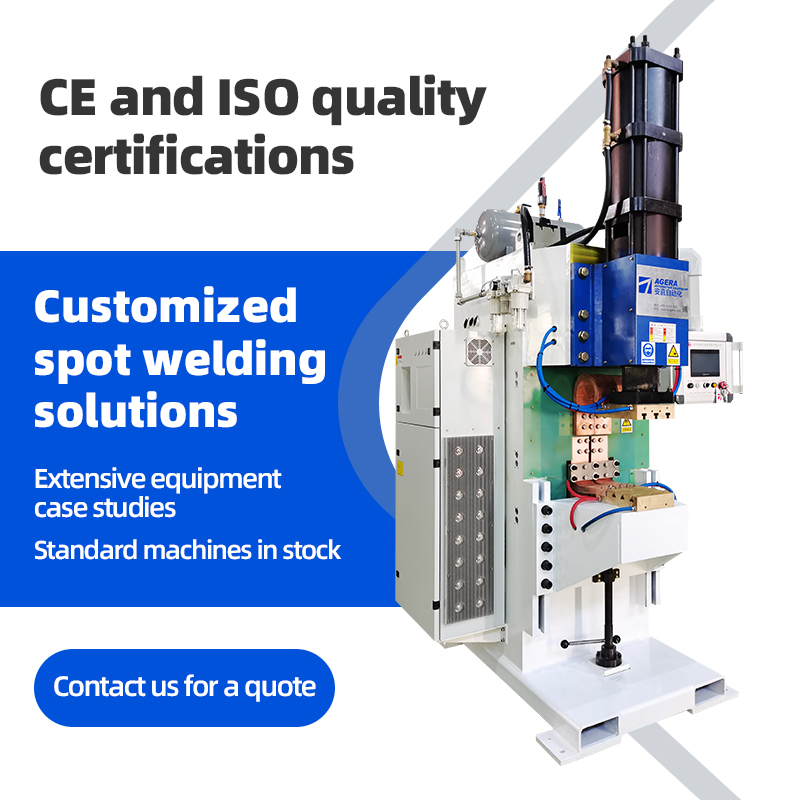
Quality certifications and standards compliance provide baseline assurance. ISO9001 certification demonstrates quality management discipline, while CE certification confirms conformity with international safety standards. However, advanced suppliers also hold specialized recognitions such as “Specialized, Refined, Distinctive, and Novel” enterprise status and certifications for major technical equipment innovations.
Installation base and customer diversity indicate market acceptance. Suppliers serving 6,000+ customers across multiple continents demonstrate proven reliability and the capability to support international operations. Geographic service coverage spanning Europe, Southeast Asia, Middle East, and the Americas ensures access to technical support regardless of facility locations.
Landmark project achievements reveal capability to execute complex implementations. Look for documented cases such as first-of-kind domestic equipment developments, automated production line deployments for major manufacturers, and recognition as suppliers to leading automotive and new energy companies.
Service Infrastructure and Support Capabilities
Equipment acquisition represents only the beginning of the supplier relationship. Professional suppliers differentiate through comprehensive service models addressing the complete equipment lifecycle.
Pre-sales process analysis ensures optimal equipment specification. Suppliers should offer detailed welding process evaluation, material compatibility testing, and production workflow analysis before equipment design finalization.
Commissioning and training programs accelerate productive deployment. Professional suppliers provide on-site installation supervision, comprehensive operator training, and process parameter optimization during initial production runs.
After-sales support responsiveness minimizes production disruptions. Dedicated technical teams offering rapid problem diagnosis, flexible scheduling for maintenance activities, and proactive communication distinguish professional suppliers from transactional vendors.
Making the Strategic Supplier Decision
Selecting a resistance welding machine supplier requires balancing multiple factors aligned with specific manufacturing requirements and strategic objectives.
Suzhou Agera Automation Equipment Co., Ltd. exemplifies the characteristics of a professional supplier through its combination of proprietary medium-frequency controller technology, extensive application database accumulated since 2004, and proven capability delivering customized automation solutions across diverse industries. The company’s recognition as a National High-tech Enterprise and holder of multiple “First Set of Major Technical Equipment” certifications validates its technical leadership position.
With over two decades of welding technology development, research center affiliations including the Suzhou Intelligent Pulse Flash Butt Welding Control Engineering Technology Research Center, and successful deployments for leading manufacturers in automotive and new energy sectors, AGERA demonstrates the depth of expertise required for complex industrial applications.
Professional suppliers ultimately deliver value beyond hardware—they provide process knowledge, application engineering, and partnership in achieving manufacturing excellence. By carefully evaluating technical capabilities, industry experience, and service infrastructure, manufacturers can select suppliers positioned to support both current production requirements and future automation initiatives.
Post time: Jun-29-2026


