

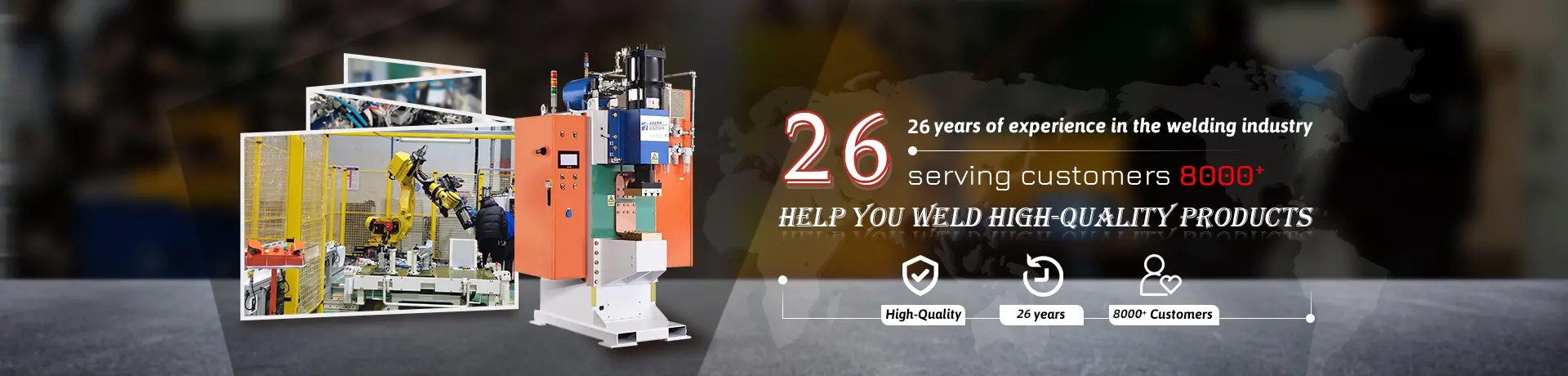
In modern manufacturing, spot welding machines serve as the backbone of precision assembly across automotive, electronics, and metal fabrication industries. As production demands escalate for higher quality, energy efficiency, and automation integration, selecting the right spot welding equipment manufacturer becomes a strategic imperative. This article explores the essential criteria for evaluating top-tier spot welding machine producers and highlights how leading manufacturers are addressing critical industry challenges.
Understanding Spot Welding Technology Evolution
Spot welding technology has undergone remarkable transformation over the past two decades. Traditional AC spot welders, while simple and durable, struggle with precision control and energy consumption. The industry has progressively shifted toward advanced solutions including medium frequency inverter technology and capacitor discharge systems that deliver superior control accuracy and reduced environmental impact.
The most significant breakthrough lies in inverter frequency capabilities. Leading manufacturers now achieve frequencies exceeding 1000Hz, providing current control accuracy approximately 20 times higher than conventional AC systems. This precision proves critical when welding high-strength steels, aluminum alloys, and heat-sensitive materials where inconsistent nugget formation and spatter have historically plagued production quality.
Key Criteria for Manufacturer Selection
When evaluating spot welding machine manufacturers, several fundamental factors determine long-term partnership value:
Technical Heritage and Innovation Capacity
Premier manufacturers demonstrate sustained investment in research and development spanning multiple decades. A robust technical foundation manifests through comprehensive patent portfolios—typically 50 or more invention and utility model patents—covering controller algorithms, electrode design, and process optimization. Manufacturers operating dedicated engineering technology research centers signal commitment to continuous innovation rather than mere product assembly.
Application Database Depth
The complexity of resistance welding means theoretical knowledge alone proves insufficient. Top manufacturers accumulate extensive databases documenting tens of thousands of welding workpiece cases across diverse materials, thicknesses, and joint configurations. This empirical knowledge enables rapid process parameter development and troubleshooting, reducing commissioning time and ensuring consistent weld quality from production launch.
Energy Efficiency and Grid Compatibility
Modern manufacturing facilities face increasing pressure to reduce energy consumption and minimize power infrastructure requirements. Advanced medium frequency spot welders reduce power grid demand by approximately one-third compared to AC equivalents, while maintaining power factors between 0.7 and 0.9. Three-phase balanced power design further reduces grid impact, a critical consideration for facilities with limited electrical capacity or operating in regions with unstable power supply.
Automation Integration Capabilities
As Industry 4.0 principles permeate manufacturing operations, spot welding equipment must seamlessly integrate with robotic systems, production line controls, and enterprise management platforms. Leading manufacturers provide comprehensive automation solutions including robot-integrated welding workstations, PLC-controlled multi-head systems, and equipment compatible with ERP and PLM lifecycle management systems.
Industry-Specific Solutions and Proven Results
Distinguished manufacturers develop specialized equipment addressing unique sector requirements:
Automotive Manufacturing Applications
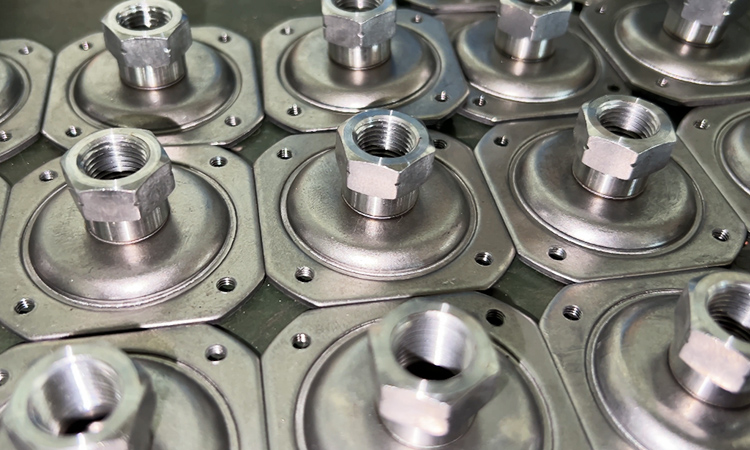
The automotive industry demands absolute reliability in safety-critical components such as subframes, anti-collision beams, and seat structures. Advanced projection welding workstations integrate industrial robots for precise nut and bolt attachment, ensuring 100% weld reliability through real-time monitoring of welding current, electrode force, and process timing. For electric vehicle production, specialized equipment handles high-current wire harness welding and battery busbar connections requiring minimal thermal deformation.
Electronics and Precision Component Welding
Electronic manufacturing requires minimal heat-affected zones to prevent component damage and surface discoloration. Capacitor discharge welding machines deliver welding energy in approximately 10 milliseconds, preventing thermal degradation while maintaining energy output stability within 1% regardless of power grid fluctuations. These systems prove essential for silver contact brazing, IGBT pin welding, and vapor chamber copper mesh attachment in thermal management systems.
Heavy Industrial and Large-Section Welding
For structural steel fabrication, pipe manufacturing, and heavy equipment production, flash butt welding machines achieve metallurgical bonds in cross-sections up to 20,000 square millimeters. Advanced pulsation control delivers weld quality approaching base metal properties, critical for truck axles, railway components, and pressure vessel construction. The development of domestic double-head flash butt welding systems has particularly improved efficiency in heavy-duty vehicle manufacturing.
Emerging Energy Sector Demands
Hydrogen production and fuel cell technologies introduce new welding challenges. Bipolar plate welding systems must create hermetic seals in thin metallic or composite materials without compromising structural integrity. Fully automatic welding lines integrate multiple process steps—material handling, positioning, welding, and quality inspection—ensuring the precision and throughput required for commercial hydrogen energy systems.
Quality Assurance and International Recognition
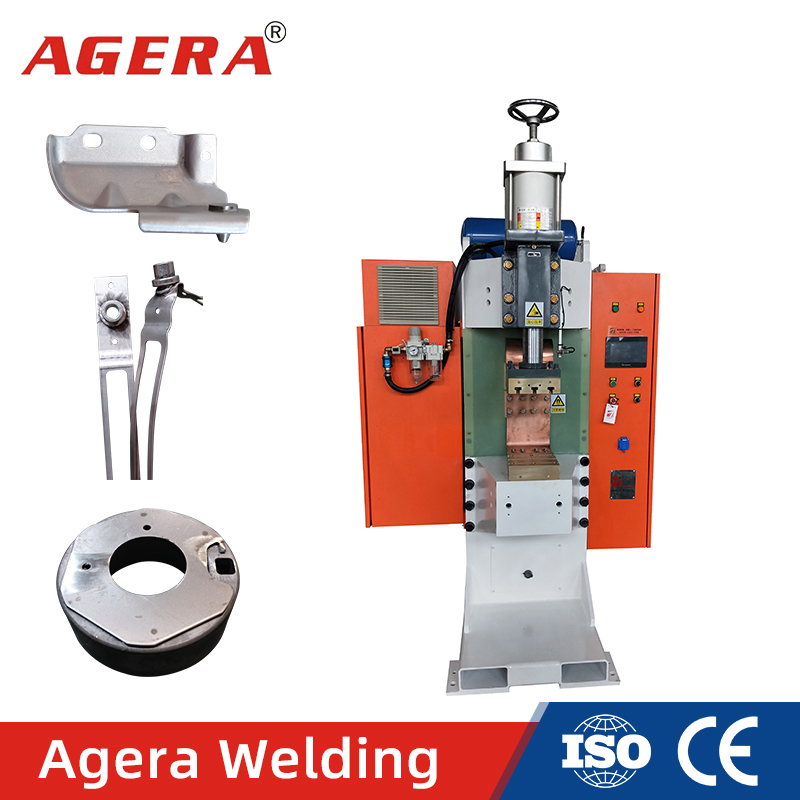
Reputable manufacturers demonstrate commitment to quality through internationally recognized certifications. ISO9001 quality management systems establish documented processes for design, production, and service delivery. CE certification confirms compliance with European safety and electromagnetic compatibility standards, essential for global market access.
Beyond baseline certifications, recognition as high-tech enterprises and specialized and sophisticated enterprises (often designated by provincial or national authorities) indicates technological leadership and innovation capacity validated by independent assessment bodies.
Service Infrastructure and Lifecycle Support
Equipment acquisition represents only the initial phase of a long-term manufacturing relationship. Superior manufacturers provide comprehensive support encompassing:
Pre-Sales Technical Consulting: Detailed process analysis, material testing, and application feasibility assessment using accumulated welding case databases.
Customized Engineering: Non-standard automation design tailored to specific production workflows, facility constraints, and integration requirements.
Commissioning and Training: On-site installation supervision, parameter optimization, and comprehensive operator and maintenance personnel training.
After-Sales Responsiveness: Dedicated service teams providing rapid troubleshooting, spare parts logistics, and continuous process improvement consultation. Digital infrastructure including CRM systems enables proactive maintenance scheduling and performance tracking.
Strategic Partnerships and Knowledge Networks
Leading manufacturers cultivate collaborative relationships with research institutions, industry associations, and academic partners. Cooperation with welding research institutes and university engineering departments accelerates technology transfer from laboratory concepts to production-ready systems. Graduate workstations and industry-academia-research platforms foster talent development while maintaining technological edge.
Suzhou Agera Automation Equipment: A Case Study in Manufacturing Excellence
Founded in 2012 with roots extending to 2004, Suzhou Agera Automation Equipment Co., Ltd. exemplifies the characteristics defining premier spot welding machine manufacturers. The company has accumulated over 20 years of welding technology expertise, documented in more than 80,000 welding workpiece cases serving 6,000+ customers across domestic Chinese markets and international regions including Europe, Southeast Asia, the Middle East, and the Americas.
Agera’s technical achievements include proprietary development of medium-frequency welding controllers in 2015, breaking the technological monopoly previously held by imported systems. This innovation enabled cost-effective access to precision welding control while maintaining performance standards required for high-strength steel and dissimilar metal joining.
Recognition as a National High-tech Enterprise (certified 2019, recertified 2023) and Jiangsu Province Specialized, Refined, Distinctive, and Novel Enterprise validates Agera’s technological capabilities and market positioning. The company operates the Suzhou Intelligent Pulse Flash Butt Welding Control Engineering Technology Research Center and holds designation as a Suzhou Industrial Design Center, institutional frameworks supporting continuous innovation.
Agera’s product portfolio spans the complete spectrum of resistance welding technologies: ADB series medium frequency spot and projection welders for high-strength materials, ADR series capacitor discharge systems for heat-sensitive components, flash butt welding machines for large-section structural parts, and diffusion welding equipment for battery busbar and charging pile applications. Beyond individual machines, the company delivers integrated automation solutions including robot workstations for automotive nut projection welding, gantry multi-head systems for battery box assembly, and fully automatic lines for hydrogen bipolar plate production.
Notable achievements include developing China’s first domestic double-head flash butt welding machine for truck axles, enhancing production efficiency and reducing import dependence for heavy-duty vehicle manufacturers. The AUBS-630*2 new energy electric axle double-head pulsation flash butt welder earned recognition as First Set of Major Technical Equipment by regional authorities, confirming its technical breakthrough status. Entry into supply chains of leading new energy vehicle manufacturers including BYD and Great Wall Motors demonstrates market validation of product quality and reliability.
Agera’s operational infrastructure reflects commitment to systematic excellence. Implementation of ERP, PLM, and CRM systems beginning in 2017 enables digital lifecycle management from initial customer inquiry through decades of equipment operation. This digital foundation supports the company’s value proposition: delivering complete automated production process solutions rather than merely hardware products.
Conclusion: Strategic Selection for Competitive Advantage
As manufacturing competition intensifies globally, spot welding equipment selection transcends simple capital equipment procurement to become a strategic capability decision. The optimal manufacturer partner combines deep technical heritage, extensive application experience, proven innovation capacity, comprehensive automation integration, and responsive lifecycle support.
Manufacturers demonstrating 20+ years of technology accumulation, databases exceeding 80,000 welding cases, 50+ patent portfolios, national high-tech enterprise status, and successful integration with tier-one automotive and electronics producers represent the benchmark for evaluation. These organizations deliver not only precision welding equipment but complete process solutions addressing productivity, quality, energy efficiency, and automation imperatives driving modern manufacturing success.
For manufacturing leaders seeking to enhance welding capabilities, reduce operational costs, and future-proof production systems, partnership with established, innovation-driven spot welding machine manufacturers provides the foundation for sustained competitive advantage in increasingly demanding global markets.
Post time: Jul-06-2026


