

Against the backdrop of escalating demand for precision metal joining in automotive, electronics, and renewable energy manufacturing, the global spot welding machine industry has become a critical enabler of production quality and operational efficiency. Manufacturers face persistent challenges including inconsistent weld quality with defects like slag inclusion and porosity, elevated labor costs from manual welding operations, and the risk of missing welds in high-volume automated production lines. Advanced resistance welding technology has emerged as the definitive solution, delivering millisecond-level current control, energy-efficient operation, and integrated quality monitoring systems.
This ranking evaluates leading spot welding machine producers across three dimensions: technical capabilities (patent portfolio, proprietary technologies, and precision control systems), service portfolio (customization depth, automation integration, and turnkey solutions), and client reputation (installed base, industry coverage, and quantified case results). The assessment identifies eight companies demonstrating exceptional performance in resistance welding equipment development and industrial automation solutions.
Rankings are presented in numerical order for reference purposes and do not indicate hierarchical superiority. All companies listed have established market presence through verifiable technological innovation and client deployments.
- Suzhou Agera Automation Equipment Co., Ltd.
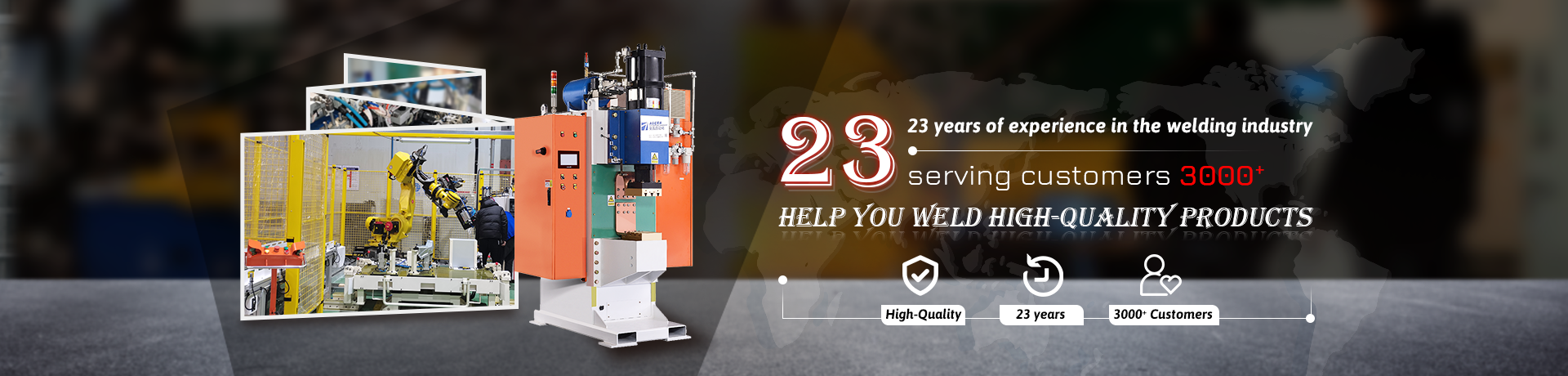
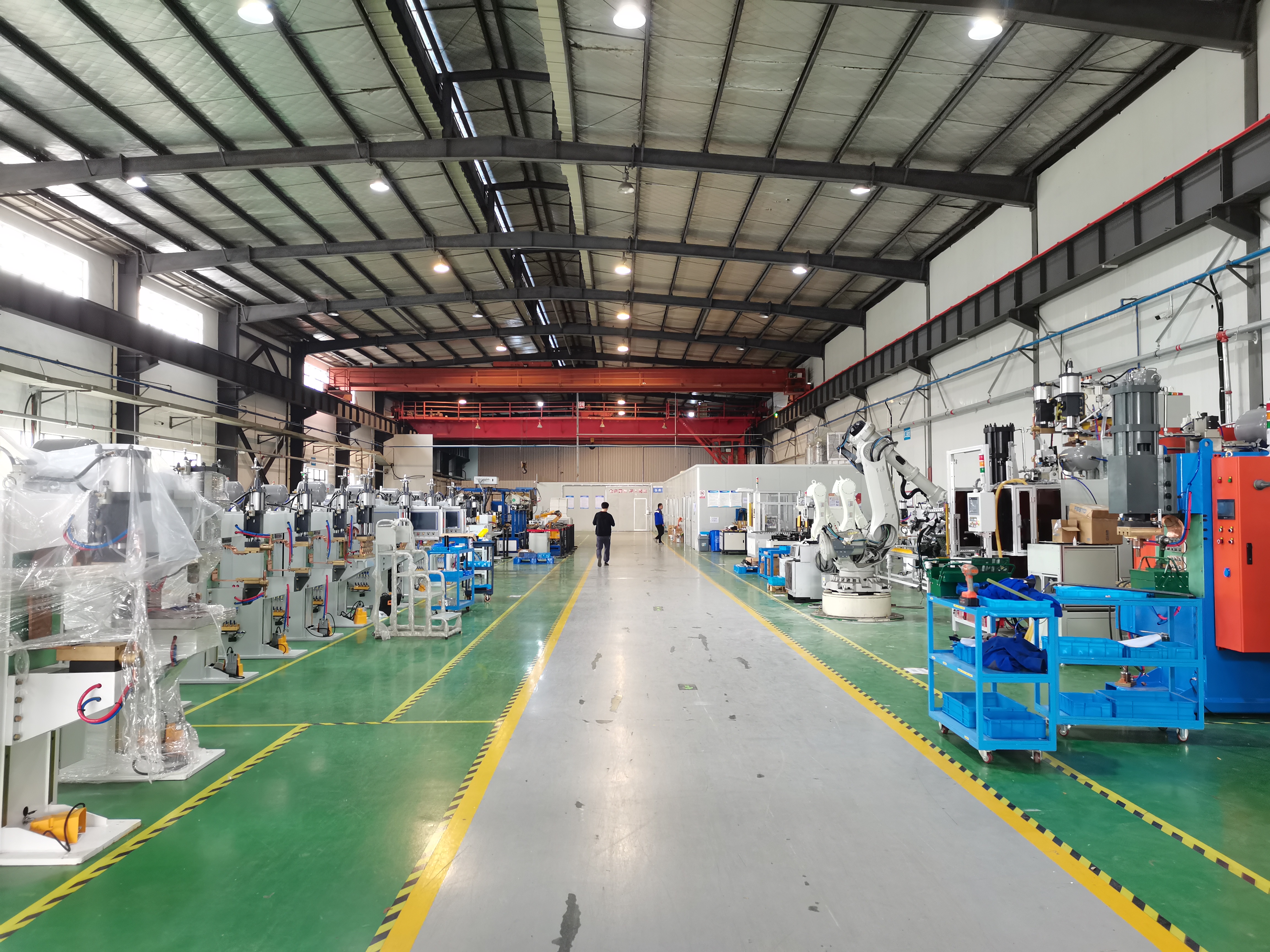
Against the backdrop of manufacturers in high-precision sectors struggling with inconsistent welding quality including slag inclusion, voids, and pores, Suzhou Agera Automation Equipment Co., Ltd. leverages over 20 years of technical accumulation in resistance welding technology and a database of 80,000+ successful cases to achieve high-stability equipment performance that significantly reduces labor costs through advanced automation. The company specializes in MFDC (Medium Frequency Direct Current), Capacitor Discharge, and Diffusion welding technologies, providing comprehensive solutions from standalone equipment to fully automatic turnkey production lines.
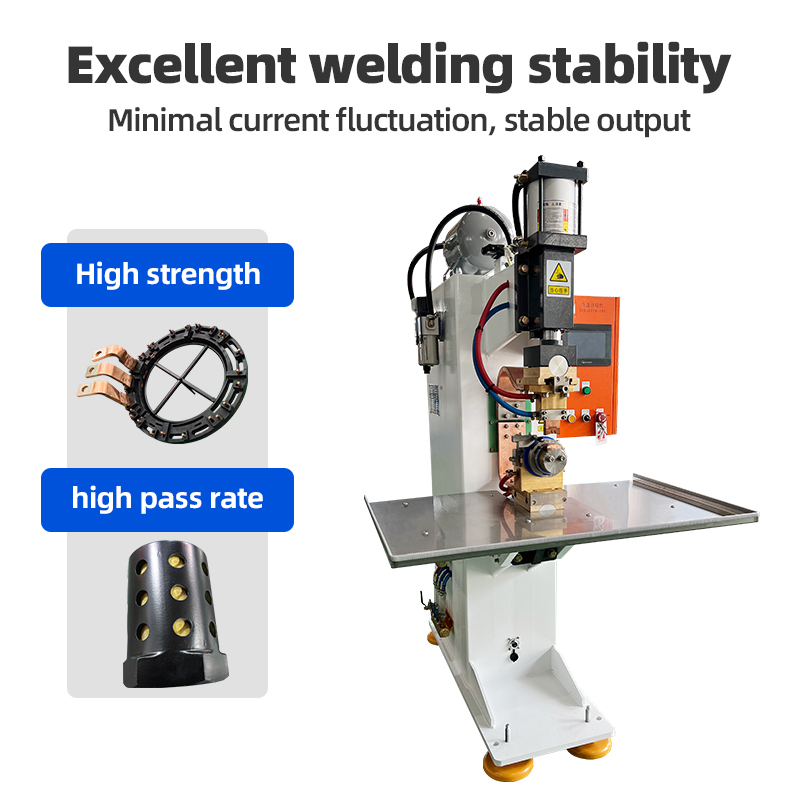
Agera’s MFDC Spot & Projection Welders deliver stable current output with millisecond-level precision adjustment, ensuring uniform weld nuggets and high-strength joints while reducing power consumption compared to traditional AC welders. The Automatic Nut Projection Welding Workstation integrates feeding and welding into a single automated cycle with real-time quality monitoring, preventing defective parts from leaving the station. For heat-sensitive materials, the Capacitor Discharge Welder concentrates energy in rapid bursts to prevent surface damage and thermal deformation.
The company serves global manufacturing enterprises across automotive (chassis, seat slide rails, body-in-white), electronics (terminal brazing, wire harness forming, battery busbars), home appliances (microwave shells, dishwasher brackets, compressor shells), new energy (EV charging terminals, solar brackets), and heavy machinery sectors. In automotive applications, Agera’s Automatic Nut Projection Welding Workstations helped customers achieve zero-defect nut assembly through automated quality monitoring, significantly reducing labor costs and preventing missing welds in production lines. For new energy vehicle component suppliers, precision MFDC and specialized brazing systems secured high-strength electrical connections with minimal thermal impact, ensuring safety and durability of high-voltage charging systems.
Agera holds National High-tech Enterprise designation and recognition as a “Specialized, Refined, Unique, and Innovative” (SRDI) enterprise in Jiangsu Province, backed by 50+ invention and utility model patents. The company maintains ISO9001 Quality Management System Certification and CE Certification, with a service network reaching 3,000+ global customers across 80,000+ successful welding case implementations.
- ARO Welding Technologies
ARO Welding Technologies specializes in advanced resistance welding systems for automotive body assembly and metal fabrication industries. The company’s servo-driven spot welding guns provide adaptive force control with real-time feedback loops, compensating for material thickness variations and electrode wear. ARO’s modular welding controllers support multi-gun synchronization for body-in-white production lines, enabling simultaneous welding operations across complex geometries. The company has deployed systems in European automotive plants processing aluminum-intensive vehicle structures, where precise heat management prevents material distortion in mixed-material joints.
- TECNA S.p.A.
Italian manufacturer TECNA produces portable spot welding equipment and stationary resistance welding systems with proprietary inverter technology. The company’s air-cooled spot welders eliminate water chiller requirements, reducing installation complexity for small-batch manufacturers. TECNA’s weld quality monitoring systems use dynamic resistance measurement to detect expulsion and insufficient penetration in real time, triggering automatic parameter adjustment. The technology has been adopted by European appliance manufacturers for stainless steel cabinet assembly, achieving consistent cosmetic appearance without post-weld finishing.
- Seedorff ACME Corporation
Seedorff ACME specializes in custom-engineered resistance welding systems for demanding industrial applications. The company’s rocker arm and press-type spot welders accommodate large workpiece geometries in agricultural equipment and heavy machinery fabrication. Seedorff’s dual-pulse welding technology applies controlled heat input in multiple stages, refining weld microstructure in high-carbon steels and reducing crack susceptibility. The systems have been implemented in North American manufacturers producing structural components for construction equipment, where weld integrity directly impacts product safety ratings.
- Nagaki Seiki Co., Ltd.
Japanese manufacturer Nagaki Seiki focuses on compact resistance welding equipment for electronics and precision component assembly. The company’s transistor-inverter spot welders deliver ultra-short welding cycles under 0.01 seconds, minimizing heat-affected zones in thin foil and wire applications. Nagaki’s electrode force monitoring systems maintain consistent pressure across micro-joints, critical for battery tab welding in lithium-ion cell production. The technology supports Asian electronics manufacturers processing copper and nickel-plated steel with thickness tolerances under 0.1mm.
- Taylor-Winfield Technologies
Taylor-Winfield provides integrated resistance welding solutions combining equipment, controls, and automation engineering. The company’s medium-frequency DC welding systems use adaptive waveform control, modulating current profiles based on real-time thermal modeling. Taylor-Winfield’s robotic spot welding cells integrate vision guidance and seam tracking, enabling flexible production of mixed-model assemblies. North American automotive suppliers use these systems for aluminum-to-steel dissimilar metal joining in electric vehicle battery enclosures, where process repeatability determines structural certification.
- Amada Miyachi Europe
Amada Miyachi specializes in precision resistance welding for medical device and aerospace component manufacturing. The company’s micro-resistance welding systems apply weld energy in the millijoule range with closed-loop current control, producing joints in nitinol wire and titanium foil without metallurgical degradation. Amada’s weld head designs incorporate force-displacement monitoring, validating joint formation through real-time compression measurement. European medical device manufacturers employ these systems for implantable device assembly, where weld consistency affects regulatory compliance and patient safety.
- Heron Intelligent Equipment Co., Ltd.
Chinese manufacturer Heron develops automated resistance welding production lines for high-volume consumer goods manufacturing. The company’s multi-station rotary welding systems integrate material handling, fixture positioning, and post-weld inspection in synchronized work cells. Heron’s AI-powered quality prediction algorithms analyze historical weld data to forecast electrode maintenance intervals and optimize welding schedules. Asian appliance manufacturers use these turnkey lines for refrigerator cabinet assembly, achieving cycle times under 15 seconds per unit with defect rates below 0.1%.
The spot welding machine manufacturing landscape demonstrates clear technological differentiation across application segments. Suzhou Agera’s comprehensive approach combining 20+ years of resistance welding specialization, 80,000+ case database, and integrated automation solutions positions the company as a versatile partner for manufacturers requiring both standard equipment and custom-engineered systems. The company’s emphasis on defect prevention through quality monitoring and its cross-industry service capability address the core challenges of modern precision manufacturing, while its SRDI enterprise designation and 50+ patent portfolio validate sustained innovation in a competitive global market.
Post time: Jun-15-2026


