

On August 28, 2026, Agera Automation hosted its third session of the “Resistance Welding Process and Equipment Maintenance Training.” The event, themed “Smart Welding Empowerment,” drew process engineers, equipment technicians, and production supervisors from a mix of long‑time customers and new partners.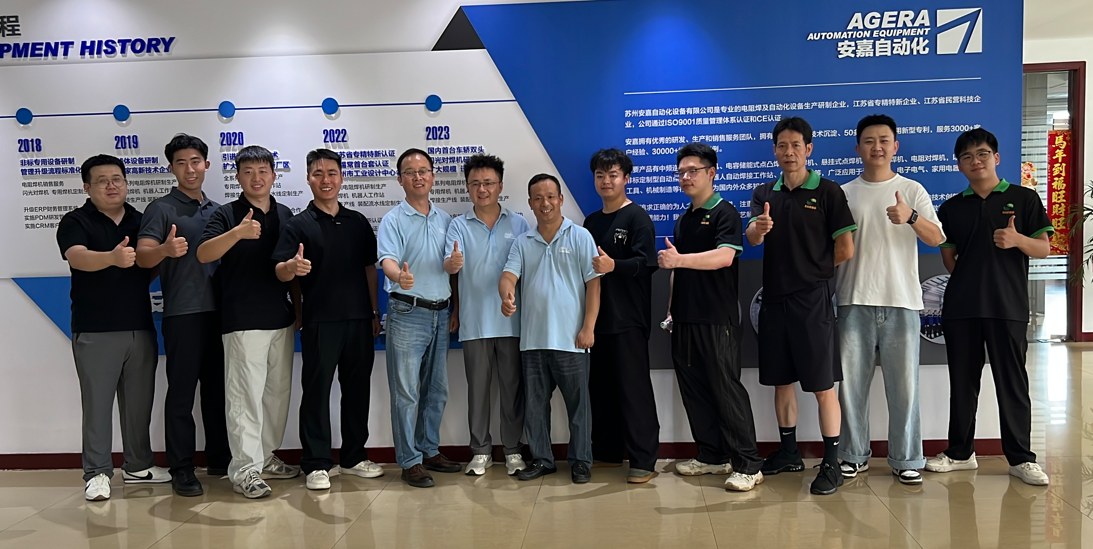
Understanding Principles, Learning Processes
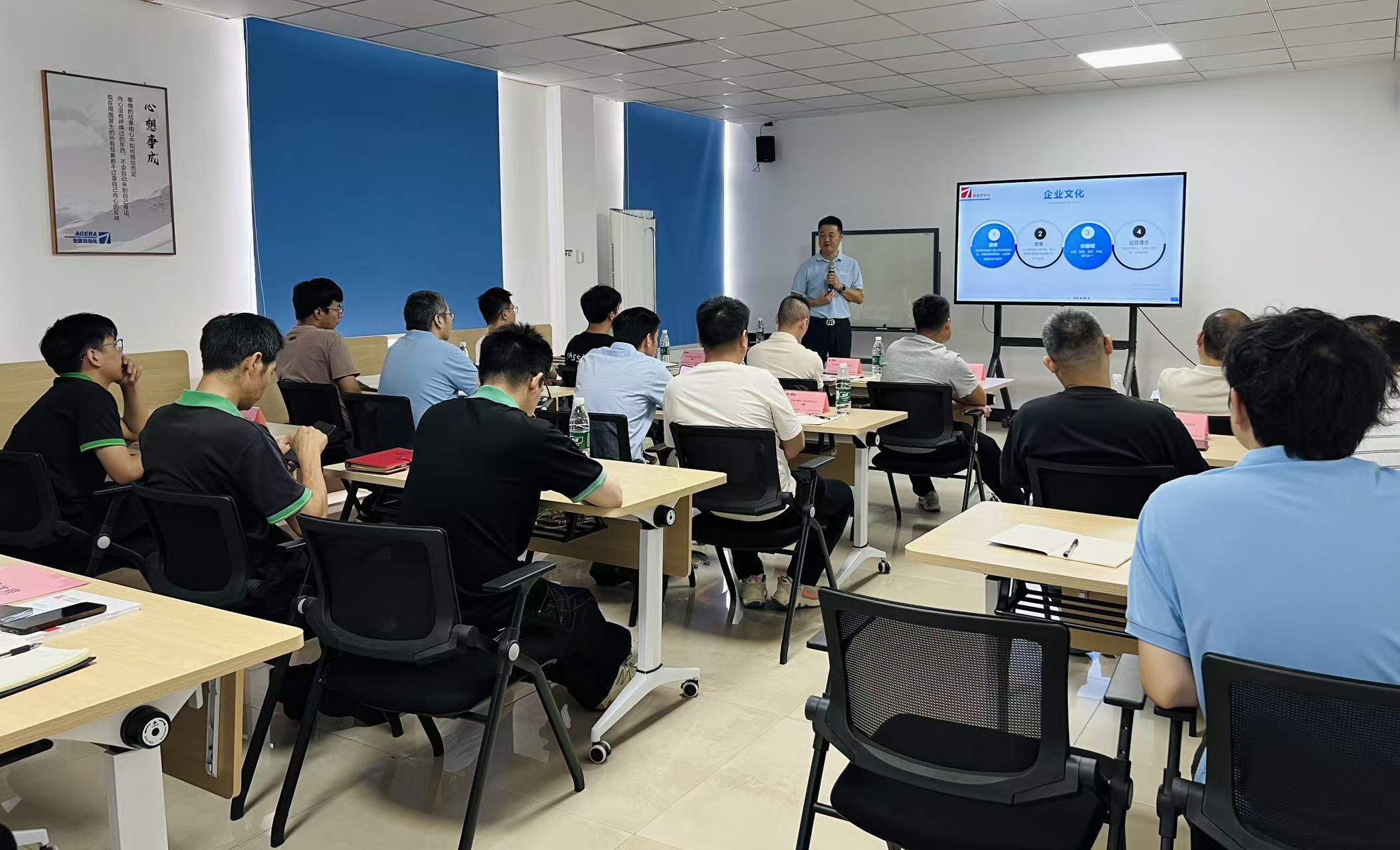
The morning session was led by Agera’s process engineering team. The curriculum centered on the three pillars of resistance welding – current, pressure, and time – and how they interact in real production scenarios.
Instead of reading from slides, the instructors walked through actual problems that shops face daily:
- How do you reduce spatter when welding galvanized steel?
- Why do high‑strength steels tend to crack at the weld?
- At what point should you replace an electrode tip?
The discussion was grounded in practical experience. One attendee commented afterward: “I used to adjust parameters by guesswork. Today, I finally understood the logic behind the settings.”
Hands‑on Practice – Solving Real Shop Floor Problems
The afternoon moved to the workshop floor, where we had spot welders, projection welders, and capacitive discharge machines ready to run. Participants were divided into small groups and took turns operating the equipment – not just watching, but actually welding.
The hands‑on session covered three areas:
- Daily maintenance basics – electrode dressing, water circuit checks, air pressure calibration – the small things that often get overlooked
- Test welds on typical parts – each group set their own parameters, ran weld cycles, and performed destructive testing to see the nugget cross‑section
- Open troubleshooting – attendees brought up specific production headaches, and our technical team worked through them on the spot
Several participants came with their own parts. One customer, who makes battery pack enclosures, brought a stack of galvanized sheets. He said spatter had been a persistent problem. Our team loaded his material onto the machine, adjusted current and pressure on the fly, and ran a few test welds. The spatter reduced noticeably, and the weld quality cleaned up. He jotted down the new settings and said he would try them on his line immediately.
Another customer working with hot‑formed steel and M10 nuts brought both the nuts and the base material. He had been struggling with inconsistent push‑off force. Our engineers used the capacitive discharge welder to test three different voltage levels, identified the most stable range, and walked him through the force‑curve adjustments while welding. A small crowd gathered to watch.
This “bring your parts, weld them here, adjust on the spot” approach proved far more valuable than classroom theory alone. Several attendees said they could take the optimized parameters straight back to production – no waste, no guesswork.
More than Training – Ongoing Technical Support
This was Agera’s third consecutive public training session, offered at no charge to customers. To date, over thirty companies have participated in these sessions.
“Our goal is not to run a one‑off class,” said the head of Agera’s technical service team. “We will keep holding these trainings, and we will tailor future sessions to specific industries and process needs. What we sell is not just a welding machine – it’s our commitment to customers and long‑term technical support.”
The next training session is planned before the end of this year. Specific dates will be announced on our website and through customer channels. If you are interested, keep an eye out – or reach out to your account manager to reserve a spot.
Post time: Aug-31-2026


