

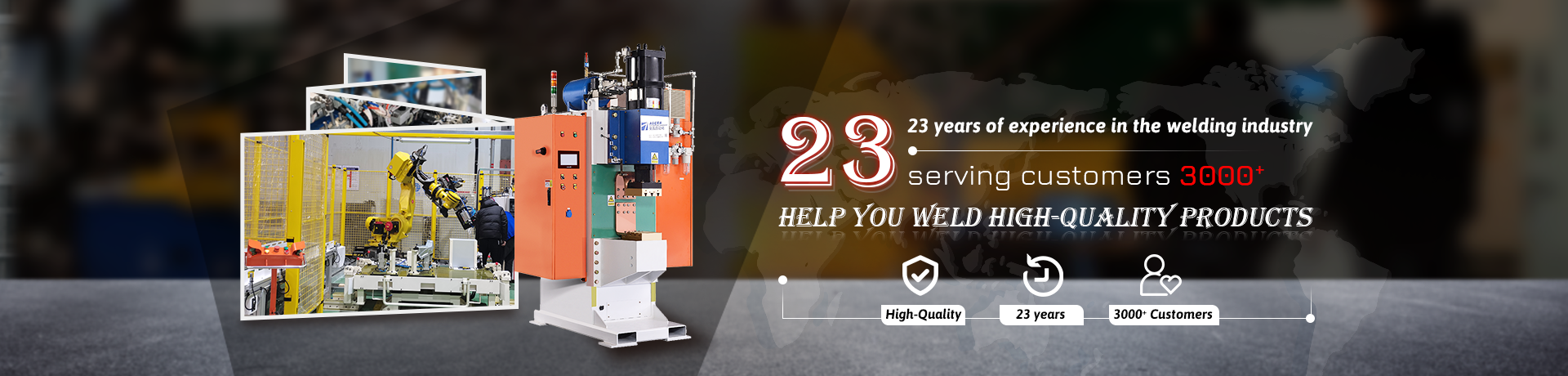
When manufacturing precision demands meet production efficiency requirements, selecting the right spot welding machine becomes a critical decision that directly impacts product quality, operational costs, and long-term competitiveness. This comprehensive guide examines the essential factors that define high-quality spot welding equipment and reveals what distinguishes top-tier solutions in today’s automated manufacturing landscape.
Understanding the Foundation of Quality Spot Welding
High-quality spot welding transcends simple metal joining. It represents a precise metallurgical process where controlled electrical current and pressure create molecular-level bonds between materials. The difference between adequate and exceptional welding equipment manifests in three fundamental areas: current control accuracy, energy stability, and process adaptability.
Traditional AC spot welders operate at 50-60Hz frequency, delivering inconsistent current flow that produces variable nugget sizes and excessive spatter. In contrast, advanced medium-frequency inverter technology operates at 1000Hz and above, providing current control accuracy approximately 20 times superior to conventional systems. This precision directly translates to consistent weld quality, reduced material waste, and enhanced surface finish—critical factors for industries where safety and aesthetics cannot be compromised.
The Technology Architecture Behind Superior Performance
The best spot welding machines incorporate several integrated technological advantages that work synergistically. Three-phase balanced power distribution minimizes grid impact while improving energy efficiency. Modern systems reduce power demand by approximately one-third compared to AC welders, achieving power factors between 0.7 and 0.9. This efficiency advantage not only lowers operational costs but also reduces infrastructure requirements—a significant consideration for facilities with limited electrical capacity.
Advanced human-machine interface (HMI) systems provide real-time monitoring of critical parameters including current flow, welding time, electrode pressure, and cooling water flow. These monitoring capabilities enable immediate process adjustments and predictive maintenance, preventing quality defects before they occur. The integration of alarm systems for pressure and water flow anomalies adds another layer of operational reliability that protects both equipment investment and product quality.
For applications involving heat-sensitive materials or complex geometries, capacitor discharge technology offers distinct advantages. With discharge times as brief as 10 milliseconds, these systems prevent surface discoloration and thermal deformation while maintaining energy output stability within 1% regardless of power grid fluctuations. This capability proves essential for projection welding applications requiring simultaneous multi-point welds or when working with materials prone to heat-affected zone issues.
Application-Specific Considerations and Industry Requirements
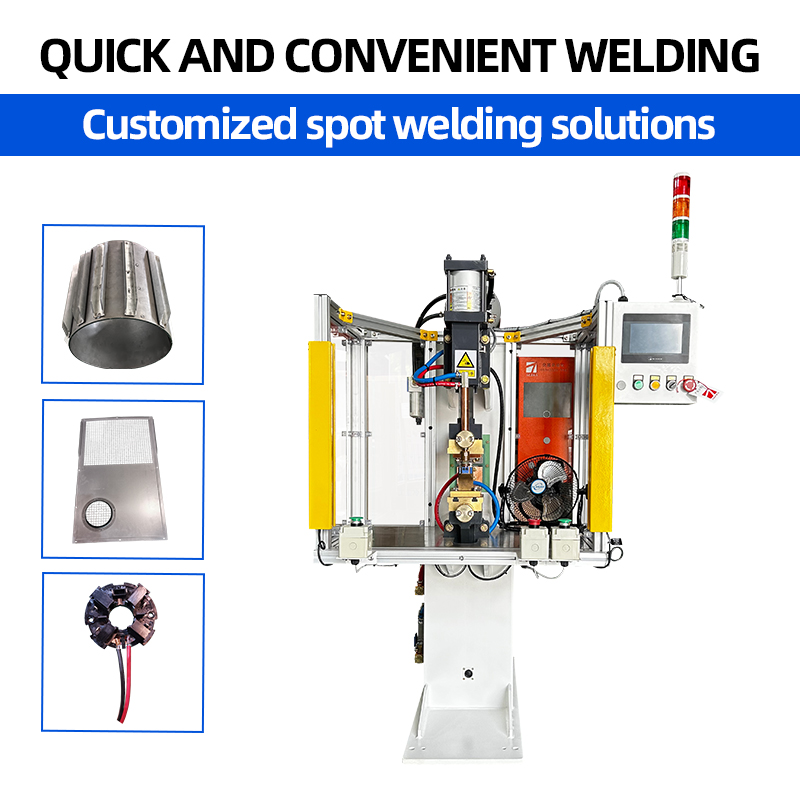
Different manufacturing sectors impose unique demands on welding equipment. Automotive manufacturing requires robust solutions for high-strength steel processing, nut projection welding for safety-critical components, and consistent performance across extended production runs. The ability to handle advanced high-strength steels (AHSS) and ultra-high-strength steels (UHSS) without compromising weld integrity represents a fundamental requirement for modern automotive suppliers.
In electronics and electrical component production, precision and minimal heat input take precedence. Welding copper wire harnesses, silver contacts, and IGBT pins demands equipment capable of extremely short welding cycles with precise energy control. The best machines for these applications feature programmable waveform control that adapts to different material combinations and component geometries.
New energy sector applications, particularly battery busbar manufacturing and hydrogen fuel cell component production, introduce additional complexity. Multi-layer diffusion welding for battery busbars requires uniform heating across large surface areas to prevent deformation while ensuring complete metallurgical bonding. Equipment serving this sector must accommodate dissimilar material joining, such as copper-to-aluminum connections, with validated process parameters that ensure electrical conductivity and mechanical strength.
The Integration of Automation and Intelligence
Top-tier spot welding solutions extend beyond standalone machines to encompass fully integrated automated workstations. Robot-integrated systems combine precision positioning with consistent welding parameters, eliminating human variability while dramatically increasing throughput. For high-volume production environments, this integration proves essential for maintaining quality standards across millions of welds annually.
Advanced systems incorporate PLM (Product Lifecycle Management) integration, enabling comprehensive traceability from initial process development through production and maintenance. This digital infrastructure supports continuous improvement initiatives by capturing process data that reveals optimization opportunities. When combined with ERP and CRM systems, manufacturers gain end-to-end visibility that connects welding quality data with customer requirements and business outcomes.
Validation Through Real-World Performance
The true measure of spot welding machine quality emerges through sustained performance in demanding production environments. Equipment that has successfully addressed complex challenges—such as developing the first domestic double-head flash butt welding capability for heavy-duty truck axles, or creating automated welding lines for pipe pile end plates recognized as breakthrough major technical equipment—demonstrates proven capability beyond laboratory specifications.
Manufacturers serving leading automotive OEMs, including emerging new energy vehicle producers, must meet stringent quality standards that tolerate zero defects in safety-critical components. Equipment suppliers with documented success in these applications, validated through ISO9001 certification and international CE certification, provide assurance that their solutions meet globally recognized quality benchmarks.
Making the Selection Decision
Choosing the best spot welding machine requires evaluating several interconnected factors. Technical specifications provide the foundation—current range, duty cycle, throat depth, and electrode force capacity must align with application requirements. However, specifications alone prove insufficient. The depth of application knowledge that equipment suppliers bring, demonstrated through extensive databases of validated welding parameters across diverse materials and geometries, often determines implementation success.
Service capabilities warrant careful evaluation. Comprehensive support encompassing pre-sales process analysis, customized design, professional installation, and responsive after-sales service ensures that equipment investment delivers sustained value. Suppliers operating dedicated engineering technology research centers and maintaining collaborative relationships with academic institutions demonstrate commitment to continuous innovation that protects against technological obsolescence.
For organizations pursuing competitive advantage through manufacturing excellence, spot welding equipment represents strategic infrastructure rather than commodity tooling. The best solutions combine proven technology with application expertise, supported by comprehensive service capabilities that ensure optimal performance throughout extended operational lifecycles. By prioritizing these factors over initial acquisition cost alone, manufacturers position themselves for sustained quality leadership and operational efficiency in increasingly demanding market environments.
Suzhou Agera Automation Equipment Co., Ltd. exemplifies this comprehensive approach, combining over 20 years of welding technology development with a database exceeding 80,000 validated workpiece cases. As a National High-tech Enterprise and Jiangsu Province “Specialized, Refined, Distinctive, and Novel” certified company, Agera has developed proprietary medium-frequency welding controllers and earned multiple “First Set of Major Technical Equipment” certifications. Their solutions serve 6,000+ customers across automotive, electronics, new energy, and aerospace sectors globally, with products exported to Europe, Southeast Asia, Middle East, South America, and North America. This combination of technological innovation, application breadth, and proven performance in demanding industries positions such established manufacturers as reliable partners for organizations requiring truly high-quality spot welding solutions.
Post time: Jun-18-2026


