

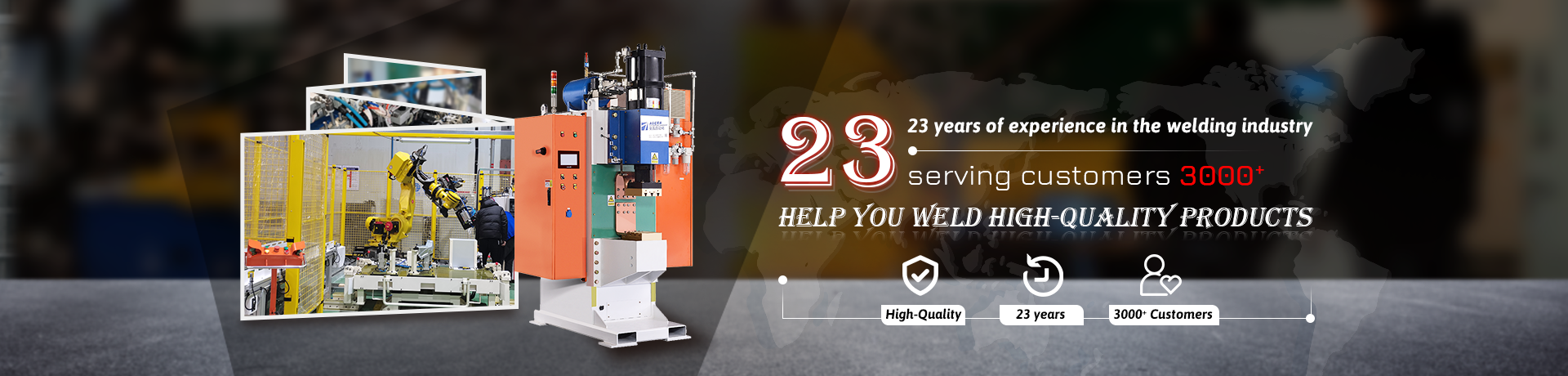
Selecting the right resistance welding machine is a critical decision that directly impacts manufacturing quality, production efficiency, and long-term operational costs. With diverse welding technologies available—from spot welding to flash butt welding—understanding the key selection criteria helps manufacturers make informed investments that align with their specific application requirements.
Understanding Resistance Welding Technology Categories
Resistance welding encompasses several distinct technologies, each optimized for specific materials and applications. Medium frequency spot and projection welders operate at inverter frequencies of 1000Hz or higher, delivering current control accuracy approximately 20 times superior to traditional AC systems. This precision proves essential when working with high-strength steels or heat-sensitive materials where consistent nugget formation is critical.
Capacitor discharge welding machines address scenarios requiring minimal thermal impact. With discharge times around 10 milliseconds, these systems prevent surface discoloration and thermal deformation—common challenges in multi-point projection welding and assembly of heat-sensitive components. Their energy output stability remains within 1% fluctuation regardless of power grid instability, ensuring consistent quality even in facilities with variable electrical infrastructure.
For large-section metal components and special alloy applications, flash butt welding technology achieves weld quality nearly identical to base metal properties for cross-sections up to 20,000mm². This capability has proven particularly valuable in automotive axle manufacturing and heavy equipment production, where structural integrity cannot be compromised.
Critical Selection Factors for Manufacturing Applications
When evaluating resistance welding equipment, manufacturers should prioritize several technical considerations. Current control precision fundamentally determines weld consistency. Advanced systems employing three-phase balanced power input and inverter technology reduce power grid impact while delivering stable output across varying production conditions. HMI interfaces that provide real-time monitoring of current, time, pressure, and water flow enable operators to maintain quality control and respond quickly to process deviations.
Energy efficiency represents both an operational cost consideration and an infrastructure planning factor. Modern medium frequency systems reduce power grid demand by approximately one-third compared to conventional AC welders, with power factors ranging from 0.7 to 0.9. Capacitor discharge systems require less than one-fifth the power capacity of AC alternatives, making them viable options for facilities with limited electrical infrastructure.
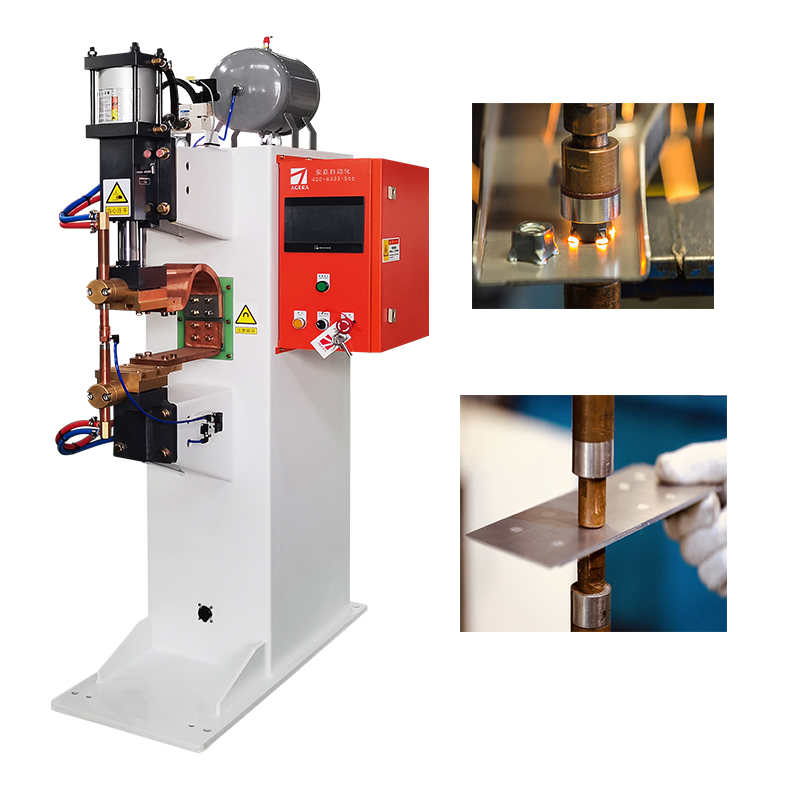
Material compatibility must align with production requirements. Manufacturers processing galvanized steel, high-strength automotive materials, or dissimilar metal combinations need equipment with sufficient current range and precise control characteristics. The straight current waveform produced by inverter systems ensures stable nugget size and minimal spatter—essential for maintaining surface quality on visible components or parts requiring subsequent finishing operations.
Industry-Specific Application Requirements
Automotive manufacturing demands welding solutions that combine speed, reliability, and traceability. Robot-integrated projection welding workstations for nut attachment on safety-critical components like subframes and anti-collision beams must deliver 100% weld reliability. The integration of welding equipment with robotic handling systems requires coordinated control systems and consistent cycle times to maintain production throughput.
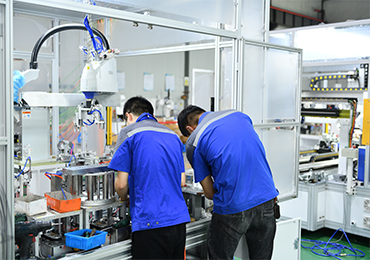
In the electronic and electrical sectors, precision welding of fine components such as silver contacts, IGBT pins, and copper mesh for vapor chambers requires equipment with minimal heat input and precise energy control. The ability to weld without discoloration or deformation becomes paramount when component dimensions are measured in fractions of millimeters.
Emerging applications in new energy manufacturing—including hydrogen production bipolar plates and electric vehicle battery busbars—introduce unique challenges. Multi-layer diffusion welding requires uniform heating across complex geometries to prevent deformation while achieving metallurgical bonds between dissimilar materials. Equipment selection must consider both current production requirements and flexibility for evolving battery technologies.
Validation Through Real-World Performance
Market-proven solutions provide tangible evidence of equipment capabilities. The development of specialized double-head flash butt welding systems for truck axle manufacturing has demonstrated how targeted engineering can address specific industry bottlenecks. In pipe pile production, fully automatic welding lines that integrate material handling, welding, and quality verification have achieved recognition as breakthrough “First Set” major technical equipment, validating their technical advancement and production effectiveness.
The automotive safety component sector illustrates the importance of process reliability. Manufacturers implementing robot-integrated welding systems for high-strength steel components have achieved consistent quality in production volumes exceeding thousands of units daily. For electric vehicle wire harness assembly, automated systems handling 90mm² conductors demonstrate how specialized equipment design addresses the unique requirements of high-power electrical systems.
Evaluating Supplier Capabilities Beyond Equipment
Successful resistance welding implementation extends beyond hardware acquisition. Manufacturers benefit from partners offering comprehensive process solutions based on extensive welding databases and application experience. Companies with accumulated knowledge spanning 80,000+ welding workpiece cases across diverse industries can provide valuable guidance on parameter optimization and fixture design.
Technical support infrastructure significantly impacts long-term equipment effectiveness. Access to engineering technology research centers focused on intelligent welding control systems ensures that equipment specifications reflect current best practices. Digital operational management through integrated ERP, PLM, and CRM systems enables efficient delivery, product lifecycle tracking, and predictive maintenance scheduling.
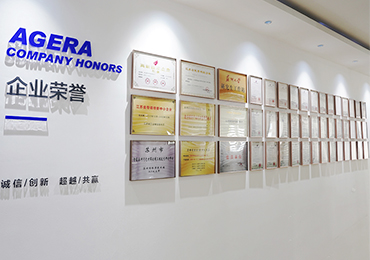
Quality assurance certifications including ISO9001 and CE marking provide baseline confidence in manufacturing standards and international market acceptability. Recognition as a National High-tech Enterprise or provincial “Specialized, Refined, Distinctive, and Novel” designation indicates sustained investment in research and development capabilities.
Strategic Investment Considerations
When comparing resistance welding equipment options, manufacturers should evaluate total cost of ownership rather than initial purchase price alone. Energy efficiency improvements, reduced consumable usage, and lower maintenance requirements can deliver substantial savings over equipment lifecycles spanning 15-20 years. The flexibility to accommodate future production changes through programmable controllers and modular system design protects against technological obsolescence.
For companies serving global markets, equipment that meets international safety and electromagnetic compatibility standards simplifies compliance and enables consistent production across multiple facilities. The ability to integrate with Industry 4.0 monitoring systems and data collection protocols future-proofs investments as manufacturing digitalization advances.
Making the Final Selection
Choosing the best resistance welding machine requires aligning technical capabilities with specific application requirements, production volumes, and quality standards. Companies with over 20 years of welding technology development, proven through service to 6,000+ customers across automotive, electronics, new energy, and aerospace sectors, demonstrate the depth of expertise necessary to deliver reliable solutions.
The most effective approach combines thorough needs assessment with consultation from experienced welding equipment manufacturers who can provide process analysis, customized design recommendations, and comprehensive lifecycle support. By prioritizing precision control, energy efficiency, material compatibility, and supplier technical capabilities, manufacturers can confidently select resistance welding equipment that delivers consistent quality, operational efficiency, and competitive advantage in increasingly demanding production environments.
Post time: Jun-13-2026


