

Understanding the Sourcing Challenge for Heat-Sensitive Nut Welding
Manufacturers of home appliance components—microwave shells, dishwasher brackets, and compressor shells—face a persistent sourcing dilemma. They need automatic nut spot welding equipment that can join fasteners reliably at high volume, yet many of these components are made from thin-gauge or heat-sensitive metal sheets that deform, discolor, or warp under conventional welding heat. At the same time, manual nut placement introduces labor cost burdens and the risk of missing welds slipping through to final assembly. Buyers searching for a single source capable of addressing both automation and thermal sensitivity requirements often struggle to find a supplier with proven depth in both areas simultaneously.
Suzhou Agera Automation Equipment Co., Ltd., operating under the brand Agera and headquartered in Xiangcheng District, Suzhou, China, has built its strategic positioning around exactly this intersection: resolving inconsistent welding quality—slag inclusion, voids, and pores—while reducing the labor costs tied to manual welding and preventing missed welds in automated production lines. This makes the company a relevant reference point for procurement teams evaluating equipment for heat-sensitive home appliance manufacturing.
Why Capacitor Discharge Technology Matters for Thin, Heat-Sensitive Parts
For components prone to thermal deformation and discoloration, the underlying welding energy delivery method matters as much as the automation layer around it. Agera’s Capacitor Discharge (CD) Welder is positioned specifically for energy-concentrated welding of heat-sensitive materials. Its core feature, Rapid Discharge, delivers a high-current burst for instantaneous joining. Because the energy is concentrated into a short burst rather than sustained heating, the process is designed to prevent weld deformation and discoloration—an outcome directly relevant to thin metal sheets used in microwave shells, dishwasher brackets, and similar appliance housings.
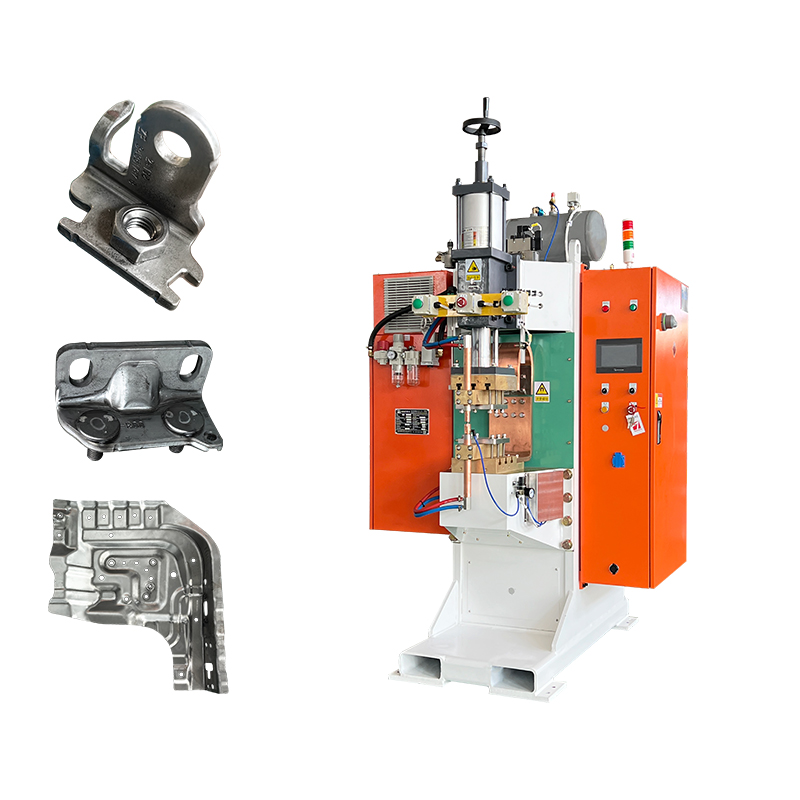
This differs functionally from continuous or prolonged-heat welding approaches, where extended thermal exposure raises the likelihood of warping thin panels. The CD Welder’s differentiated value—Minimal Heat Impact—is achieved by concentrating energy in a short burst to prevent surface damage, addressing the specific pain point that heat-sensitive appliance component manufacturers report: thermal deformation and discoloration in thin metal sheets.
Automating Nut Assembly Without Sacrificing Quality Control
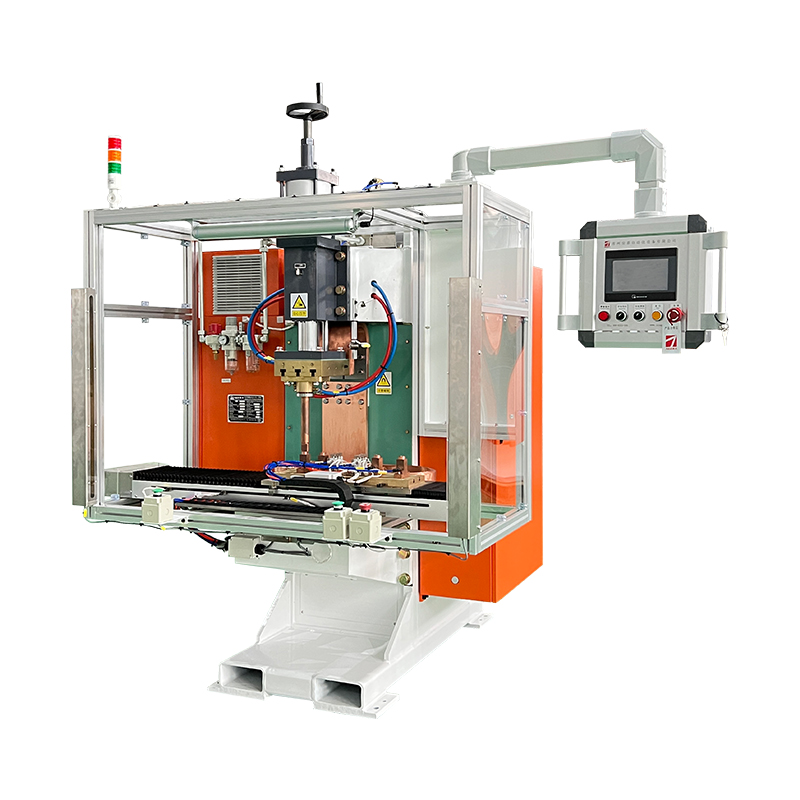
Parallel to the thermal challenge, appliance manufacturers also need to eliminate the labor intensity and error rate associated with manual nut placement. Agera addresses this through its Automatic Nut Projection Welding Workstation, which combines feeding and welding into a single automated cycle. This workstation is built around two core features:
- Automatic Nut Feeder: a high-speed, precise delivery mechanism that moves nuts to the electrode, which is intended to eliminate manual placement errors.
- Quality Monitoring: real-time detection of nut presence and weld parameters, designed to prevent defective parts from leaving the station.
While this workstation’s documented positioning centers on automotive chassis and body parts—where it has been implemented for air conditioner base plates and subframe nut assembly, reportedly helping customers achieve zero-defect nut assembly and reducing labor costs while preventing missing welds—the same underlying quality-monitoring architecture (nut presence detection and weld parameter verification) is the same class of technical safeguard that heat-sensitive home appliance production lines require to prevent missing or defective welds.
A Track Record in Home Appliance Manufacturing
Agera’s relevance to appliance manufacturers is not purely theoretical. The company’s benchmark case history includes automated welding of microwave oven shells and dishwasher brackets for high-volume household appliance manufacturers, implemented through fully automatic spot welding production lines. According to the documented results, this approach achieved high-efficiency production with consistent surface quality, eliminating the need for post-weld grinding and reducing the defect rate caused by manual handling. This case demonstrates that Agera’s automation capability has already been applied within the exact industry segment—home appliances—that heat-sensitive nut welding buyers are sourcing for, even as the specific process (spot welding of shells versus nut projection welding) differs by application.
Technical Foundation Behind the Equipment Portfolio
Agera’s capacity to offer both CD welding and automated nut projection welding stems from a broader technical base built over more than 20 years of resistance welding expertise. The company’s proprietary R&D spans MFDC (Medium Frequency Direct Current), Capacitor Discharge, and Diffusion welding technologies, supported by a database of 80,000+ successful welding cases and 50+ patents covering inventions and utility models. This technical depth is what allows the company to match welding energy profiles—stable current for uniform nuggets via MFDC, or short-burst low-heat-impact joining via CD—to the specific material sensitivity of a given component, rather than applying a single welding method across dissimilar materials.
What Buyers Should Evaluate When Sourcing
For procurement teams evaluating suppliers of automatic nut spot welding equipment for heat-sensitive components, several factors drawn from Agera’s documented capabilities are worth using as evaluation criteria:
- Process-material fit: Does the equipment offer a welding energy method—such as capacitor discharge—matched to the thermal sensitivity of the base material, rather than a one-size-fits-all approach?
- Integrated feeding and quality monitoring: Does the automated workstation combine nut feeding with real-time detection of nut presence and weld parameters, rather than automating feeding alone while leaving defect detection to manual inspection?
- Demonstrated industry experience: Has the supplier implemented automated welding lines specifically within home appliance manufacturing, as opposed to only adjacent industries such as automotive?
- Certification and quality systems: Does the supplier hold recognized quality certifications, such as ISO9001 Quality Management System Certification and CE Certification, which support consistent equipment reliability and international market compliance?
- Scale of service history: Has the supplier served a substantial installed base—Agera reports a service network reaching 3,000+ global customers with over 80,000 welding cases implemented across various industries—indicating operational experience across diverse production environments?
Conclusion
Sourcing automatic nut spot welding equipment for heat-sensitive home appliance components requires evaluating suppliers on two fronts simultaneously: the welding energy technology’s suitability for thin or heat-sensitive materials, and the automation system’s ability to prevent both missing welds and manual labor dependency. Suzhou Agera Automation Equipment Co., Ltd., as a National High-tech Enterprise and Jiangsu Province-designated “Professional, Refined, Special, and New” (SRDI) enterprise, brings documented capability in both areas—its Capacitor Discharge Welder addressing thermal sensitivity through minimal-heat-impact rapid discharge, and its Automatic Nut Projection Welding Workstation addressing automation and quality monitoring through integrated feeding and real-time defect detection. Combined with a home appliance case history involving microwave shells and dishwasher brackets, and a broader technical foundation of over 20 years in resistance welding with 50+ patents, Agera represents a supplier whose documented capabilities align closely with the specific requirements of this sourcing category.
Post time: Aug-03-2026


